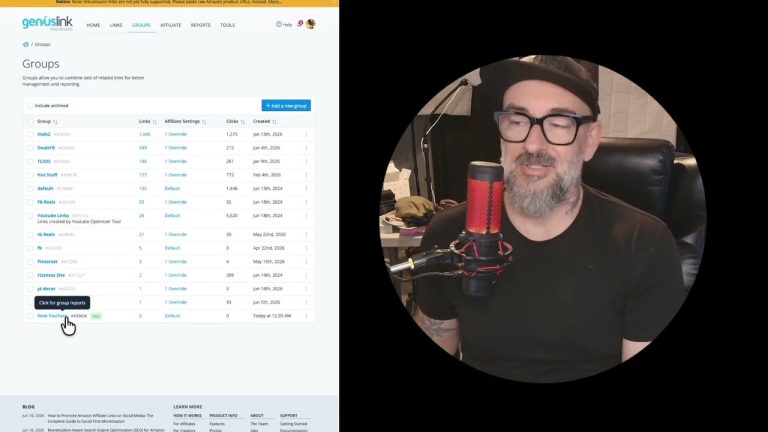
If you joined the Amazon Influencer Program because somebody told you brands would line up to send you free products, this one is for you. I’ve been doing this for almost five years, and I’ve watched too many new creators light their money on fire chasing samples that never show up, or worse, show up and never earn a dime. I’m not here to discourage you. I’m here to explain how creator stars, Creator Connections, and the free sample game actually work so you can skip the expensive lessons I learned the hard way.
In This Article
- The Free Samples Promise Is Mostly a Myth
- How Amazon Creator Stars Work: Bronze, Silver, Gold, Platinum
- What Creator Connections Actually Is
- The Seven-Day Early Access Lockout
- Why Brands Stop Sending Samples
- The Hundred-Messages-a-Day Reality
- Why Free Products Rarely Earn Commissions
- What to Focus On Instead
- Creator Connections Is a Bonus, Not a Business
The Free Samples Promise Is Mostly a Myth
Here’s the pitch most people hear before they apply: get approved, open a storefront, and brands will start shipping you free stuff to review. That pitch sells courses and gets views, but it’s not how the program works for a brand-new creator in 2026. The free sample pipeline runs through Creator Connections, and Creator Connections is gated by your creator status. A new creator with no sales history is at the back of the line, and most brands aren’t even in the sample-sending business anymore.
I want to be clear about the stakes. If you spend your first three months messaging brands for freebies instead of learning how on-site commissions work, you’ll end up with a closet full of products nobody is searching for and a storefront that earns nothing. That’s the failure mode I see constantly.
How Amazon Creator Stars Work: Bronze, Silver, Gold, Platinum
Amazon ranks creators into four tiers: bronze, silver, gold, and platinum. Your tier is driven by your performance in the program, meaning the sales and engagement you generate over time. Everyone starts at the bottom, and your star level controls what you can access inside Creator Connections.
- Bronze: where every new creator starts. Limited campaign visibility and no early access.
- Silver: some growth under your belt, but you’re still locked out of the early access window.
- Gold: you’ve proven you can move product. Early access to campaigns opens up here.
- Platinum: the top tier. First look at everything, and brands actively want you in their campaigns.
The thing nobody tells new creators is that the tier system isn’t just a badge. It determines whether you see a campaign on day one or day eight, and in a program where oversaturation kills commissions, that gap matters a lot.
What Creator Connections Actually Is
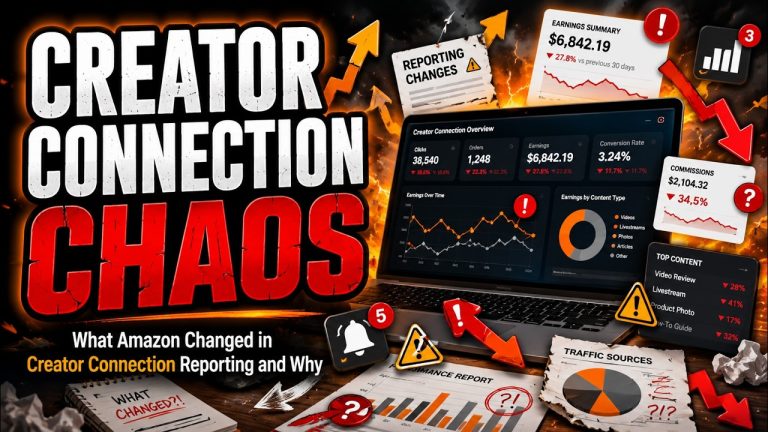
Creator Connections is Amazon’s brand campaign marketplace. Brands post campaigns offering bonus commission rates on specific products, and creators opt in and promote them. The bonus commission is the real value here. A product in your regular commission category might pay 3%, and a Creator Connections campaign might stack another 10% to 20% on top of that for qualifying sales.
Some campaigns include a messaging feature where you can contact the brand and request a sample. That’s where the free product idea comes from. But sample requests are a side door, not the front door. The program is built around bonus commissions, and treating it as a free stuff catalog is the fastest way to misunderstand it.
The Seven-Day Early Access Lockout
This is the detail that explains why new creators feel like every campaign is already picked over. When a brand launches a campaign, gold and platinum creators get early access. Bronze and silver creators don’t see it until seven days later. By the time you can opt in, the top creators have already made their videos, uploaded them, and claimed the carousel spots on the product page.
Think about what that means in practice. If a campaign has a limited sample budget, it’s gone before you ever see the listing. If the product has a video carousel with three slots, those slots are filled by day eight. You’re arriving at a party that’s already over, and that’s by design, not bad luck.
Why Brands Stop Sending Samples
Put yourself in the brand’s shoes. They launch a campaign and get flooded with hundreds of sample requests from creators with no track record. Shipping a $40 product to 300 creators is $12,000 in inventory with no guarantee any of it turns into a single video or sale. Most brands run that math once and quietly stop responding to sample requests. The campaign stays live for the bonus commission, but the free product faucet is off.
The brands that do still send samples are picky. They look at your creator tier, your existing videos, and whether you’ve actually sold anything. A bronze creator with an empty storefront is not who they’re looking for, and no amount of polite messaging changes that.
The Hundred-Messages-a-Day Reality
If you still want to play the sample game as a new creator, here’s the real volume you’re signing up for. I’ve watched creators send a hundred messages a day to get a handful of replies, and only a fraction of those replies turn into a product actually showing up at the door. That’s hours of work every single day for a return that might be two or three items a week, and those items usually aren’t the ones you’d pick if you were choosing based on data.
Compare that to spending the same hours filming ten videos on products you already own or products with proven demand. One path builds a storefront that earns while you sleep. The other builds an inbox full of unanswered messages.
Why Free Products Rarely Earn Commissions
Even when a sample lands, the economics usually don’t work. The products brands give away freely are the ones every creator is also getting, which means the video carousel on that listing is already stacked with reviews. Your video becomes one of forty competing for three visible slots. Oversaturated products are the single biggest reason influencer videos earn nothing, and free samples are oversaturated almost by definition.
On top of that, sample products are often new listings with low sales velocity. A product that sells 50 units a month across the entire marketplace isn’t going to generate meaningful on-site commissions no matter how good your video is. You’re trading your time for a product that costs the brand $15 and earns you $0.
What to Focus On Instead
The creators who actually make money in this program learned the fundamentals first. That means understanding how on-site commissions are earned through the video carousel, which commission categories pay the most, and how to find products that have real sales volume but not a crowded carousel. This is exactly why I built Oink. The product research tool surfaces listings with strong demand and open carousel slots so you’re not guessing, and Storefront Cross Check tells you which products you already have content for and which ones are missing.
I run my own storefront on the 5 Pillars system every day: research winning products, film what you own, cross check your storefront, track your sales data, and schedule comparison videos. New creators who follow that routine for 90 days consistently outperform the ones who spent the same 90 days chasing samples. The difference isn’t talent. It’s where the hours go.
Creator Connections Is a Bonus, Not a Business
Here’s the mindset shift I want you to leave with. Creator Connections is a bonus program layered on top of the Amazon Influencer Program. It only works once you understand how the base program works. Climb to gold by generating real sales, and the early access window, the brand relationships, and yes, the occasional sample will come to you instead of you begging for them.
Start with products you own. Learn the carousel. Study your sales data. Build the habit. Everything else in this program is downstream of that foundation.
Here’s the full video where I walk through all of this:
If you’re new and you want to skip the sample-chasing phase entirely, grab Oink. It’s the product research tool I built to find winning products that aren’t oversaturated, track your storefront with Storefront Cross Check, and follow the 5 Pillars every day. Try it at oinkforinfluencers.com.