Is crossing your videos from your Amazon storefront over to YouTube a waste of your time? For a lot of you, honestly, it is. And it’s not because YouTube isn’t valuable — it absolutely is. The problem is you’re not doing it right. You’re missing the single most fundamental thing that drives conversions on YouTube, and until you fix it, you’ll keep throwing videos over the fence and wondering why nothing happens. Let me walk you through exactly what’s going wrong and how to fix it.
In This Article
- The Real Reason Your Cross-Posts Aren’t Converting
- YouTube Isn’t the Problem — Your Structure Is
- Why Your Amazon Videos Have No Call to Action
- On YouTube, the Call to Action Is the Whole Game
- What to Actually Say in Your YouTube Videos
- Respect the Platform You’re Posting To
- How Oink Makes Cross-Posting Worth It
The Real Reason Your Cross-Posts Aren’t Converting
A lot of us are blindly cross-posting. You take a video straight off your Amazon storefront, throw it over onto YouTube, and hope something great happens. Then a few weeks go by and you realize nothing’s happening at all. There are a couple of reasons for that. The first is simple: a lot of you don’t have a following on YouTube yet. You’re hoping to land in a random search result and pick up a random click here and there. Maybe you build subscribers over time, but right now you don’t have an audience watching and waiting. That’s problem number one.
YouTube Isn’t the Problem — Your Structure Is
The bigger problem is the structure of the video itself. An Amazon shoppable video is built for Amazon. On Amazon, we don’t do a call to action. Amazon doesn’t want us to. We talk about the product, we demonstrate it, we show it up close, we answer the questions a buyer would have — but at no point do we tell the viewer to go click anything. That’s by design, and it works great on the platform it was made for.
Then we take that exact same video — the one with zero call to action baked into it — and we ship it over to YouTube, where the call to action is the entire driver of conversions. It doesn’t work. You’re sending a video with no instructions to a place that runs entirely on instructions.
Why Your Amazon Videos Have No Call to Action
This isn’t a mistake on your part — it’s how Amazon wants on-site shoppable videos made. The product card is right there next to your video in the carousel. The buyer already has intent; they’re on Amazon, they’re shopping, and the path to purchase is one tap away. Telling someone to “click the link below” inside an Amazon video would be pointless at best and against the spirit of the platform at worst. So we leave it out. The trouble starts the moment that same file leaves Amazon and lands somewhere the buying path isn’t obvious.
On YouTube, the Call to Action Is the Whole Game
YouTube needs two things to make you money: a video that holds attention, and a link that actually gets clicked. The link only gets clicked when you plant the seed. If your video never tells the viewer that there’s somewhere to go, that seed never gets planted. All they’re doing is watching and absorbing — they have no idea they’re supposed to look down in the description, no idea there’s a product waiting for them. You can have the best demonstration in the world, but without a call to action it converts like a billboard in the desert.
What to Actually Say in Your YouTube Videos
The fix is not complicated. You just have to say it out loud. Something as simple as, “The link is in the description below if you want to go check it out,” does the heavy lifting. Say it once in the middle, say it again near the end. And if you can add text on the screen pointing to the description, even better — that reinforces the message and converts even more.
- Tell viewers, verbally, that the link is in the description.
- Add on-screen text reminding them where to click.
- Give them a reason — what they get when they click matters as much as the instruction to click.
- Repeat it. One mention is easy to miss; two or three lands.
Respect the Platform You’re Posting To
Here’s my real recommendation: if you want the videos you cross-post to actually make you money, you have to consider the platform you’re sending them to. You can’t blindly send a video set up for Amazon to YouTube and expect it to behave the same way. The rules are different there. What drives conversions is different there. Take the few minutes to understand what each platform needs, and tailor the video to it. The creators who get burned are the ones who skip that step, dump their content everywhere, and then feel disappointed when it doesn’t convert. In reality, they just never took the time to make those videos better for the platforms they landed on.
How Oink Makes Cross-Posting Worth It
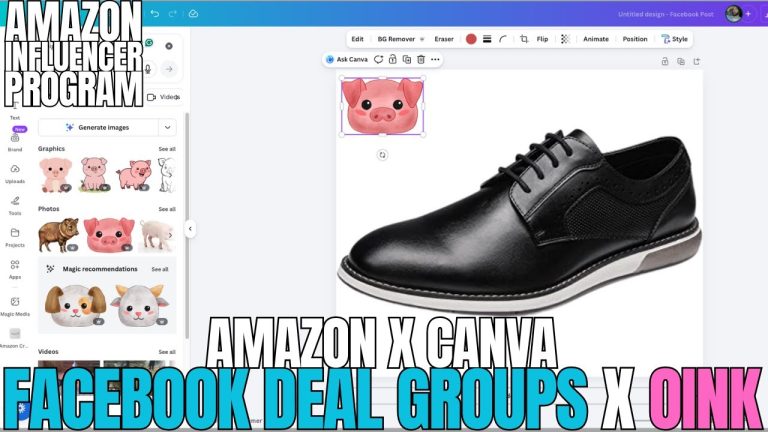
This is exactly why I built Oink for Influencers the way I did. Cross-posting only pays off when you’re putting the right products in front of the right audience and doing it efficiently. Oink’s product research tools help you find videos and products worth making content for in the first place, and features like Storefront Cross Check and Unavailable Video Matching keep your storefront clean so the content you do create has the best shot at converting. The tool handles the busywork so you can spend your energy on the part that actually moves the needle — making the video better for the platform it’s going to.
Cross-posting isn’t a waste of time — doing it blindly is. Add the call to action, respect the platform, and let your content work the way it’s supposed to. If you want to find winning products and make cross-posting actually pay, grab Oink for Influencers over at oinkforinfluencers.com and start making more from the content you’re already creating.