Creator Connections lifted the cap from 800 to 2,000 on a small batch of campaigns this week, and at first glance it looked random. It is not. After digging through the data for two days, I think there is a very clear explanation for why Amazon did this, why it only hit a tiny number of campaigns, and what it tells us about whether anyone at Amazon is actually paying attention to the capacity problem. Here is what I found.
In This Article
- How Small the 2,000 Cap Rollout Really Is
- These Were Revived Campaigns, Not New Ones
- How Fast the Extra Slots Filled Up
- The Pattern in the Campaign Names
- The Parent Brands That Got the Lift
- The Prime Day and Admin-Created Clues
- What I Think Actually Happened
- Why This Is Not Great News, But Not Bad News Either
- What You Should Do Right Now
How Small the 2,000 Cap Rollout Really Is
Let me put the number in perspective first. When we woke up on day one, around 55 campaigns had been raised from 800 slots to 2,000 slots. By the end of that day, exactly one more had been added, and it came in late. By the following morning, a few of the original batch had filled and been replaced with about 11 more, which puts us at roughly 63 or 64 campaigns total with the higher cap.
Against the full pool of campaigns in Creator Connections, that is a rounding error. If you were hoping this was the start of a platform-wide cap increase, the data does not support it. This is a targeted move, and the targeting is the interesting part.
These Were Revived Campaigns, Not New Ones
Here is the first thing that jumped out at me. The 55 campaigns that got the lift were not fresh campaigns. They were existing campaigns that had already hit their 800 cap and closed. Amazon essentially raised them from the dead, took them from 800, and slapped 2,000 on them.
That is odd behavior if you think about it from the brand side. A brand that already had 800 creators opted in under one set of terms is now getting another 1,200 people dropped into the same campaign. It does not really hurt anyone, but it is not how a brand would normally manage its own campaign. The newer additions that came in on day two followed the same pattern: revived, previously full, and part of the same brand groupings I will get to below.
How Fast the Extra Slots Filled Up
If you want proof that demand in Creator Connections massively outstrips supply, look at how quickly those extra 1,200 slots disappeared. Within the first 15 hours, two campaigns had completely filled the 1,200-slot gap. By the next morning, about four were full and another five were sitting at 1,400 claims or higher, meaning they had absorbed 600 or more new creators in roughly a day.
Those were the campaigns with the best-known brand names and the highest commission rates in the batch, which is exactly what you would expect. Creators move fast on good opportunities. The capacity ceiling, not creator interest, is the bottleneck in this program, and this little experiment proved it in under a day.
The Pattern in the Campaign Names
While I was going through the list, I kept noticing that campaign titles for completely different brands were almost identical. There were about nine brands where the only thing that changed in the campaign title was the brand name itself. Same structure, same wording, same formatting.
That does not happen when nine independent brands each build their own campaign. It happens when one entity builds all nine from the same template. So I started looking at who those brands actually were.
The Parent Brands That Got the Lift
The answer is that the “random” brands are not random at all. They are sub-brands sitting under a handful of massive parent companies. Here is what the groupings look like:
- L’Oréal: Lancôme, IT Cosmetics, Youth to the People, Kiehl’s, Armani Beauty, and others under the L’Oréal umbrella all got the raise.
- Estée Lauder: nine sub-brands, including Estée Lauder, Clinique, Bobbi Brown, Too Faced, Smashbox, Aveda, Bumble and Bumble, Lab Series, and Dr. Jart+.
- Philips: Philips, Philips Sonicare, and Norelco.
- Unilever: three brands.
- Groupe SEB: three brands.
- One-offs: larger standalone brands like Hey, Sun Bum, and Cetaphil.
Every one of these is a big-budget, enterprise-level advertiser. There are no small sellers in this group. That alone tells you this was not a systematic change rolled out by an algorithm. It was a list.
The Prime Day and Admin-Created Clues
Two more data points make the picture clearer. First, 50 out of the original 55 campaigns specifically mention Prime Days (or the Prime Day acronym) in the campaign title as the purpose of the campaign. Plenty of other campaigns reference Prime Day and did not get the lift, but 50 of 55 is a very high hit rate.
Second, a lot of these campaigns carry a label in the background data that reads “admin created” or something similar. Not all of them, but at least some in every brand group. They also appear to have been edited in batches, with multiple brands processed within milliseconds of each other. Brands do not do that. Someone with admin access at Amazon does.
What I Think Actually Happened
Put all of that together and here is my read. Amazon hand-selected a group of major brands, almost certainly under some kind of agreement with those brands, and manually adjusted their existing Prime Day campaigns to the 2,000 cap. I do not believe the brands themselves had the ability to change the cap on campaigns that were already live in the system. It is possible that new campaigns those brands create going forward also get the 2,000 lift because of who they are, but the revived campaigns we are seeing were clearly touched from the inside.
I said in an earlier video that this looked like Amazon testing our reaction to a cap lift, and it might still partially be that. But I no longer think testing is the main point. This was a specific move for specific brands tied to a specific event.
Why This Is Not Great News, But Not Bad News Either
I will be straight with you: this is less hopeful than it looked on day one. A platform-wide cap increase is not happening tomorrow because of this. But there is a real positive takeaway, and for me it is the bigger one.
Somebody at Amazon knows the capacity problem exists. These brands had every campaign full, and rather than let them sit there, someone intervened manually. Maybe it was simply faster to revive a campaign that already had 800 people in it than to launch a new one and wait for opt-ins during Prime Day. Either way, a human looked at full campaigns, recognized it as a problem, and acted.
One of my biggest concerns over the last month has been whether anyone at Amazon is even watching what is happening in Creator Connections. I am no longer concerned about that. I am still concerned about whether they will do something meaningful for the rest of us, but attention is the first step, and we now have evidence of it.
What You Should Do Right Now
Practically, nothing about your strategy should change based on this. The campaigns that got the lift filled in hours, so chasing them after the fact is a losing game. What matters is being positioned to catch the next batch the moment it appears. That means checking Creator Connections daily, prioritizing campaigns with real budgets behind them, and making sure the products you already have on your storefront are matched to any campaign that opens for them.
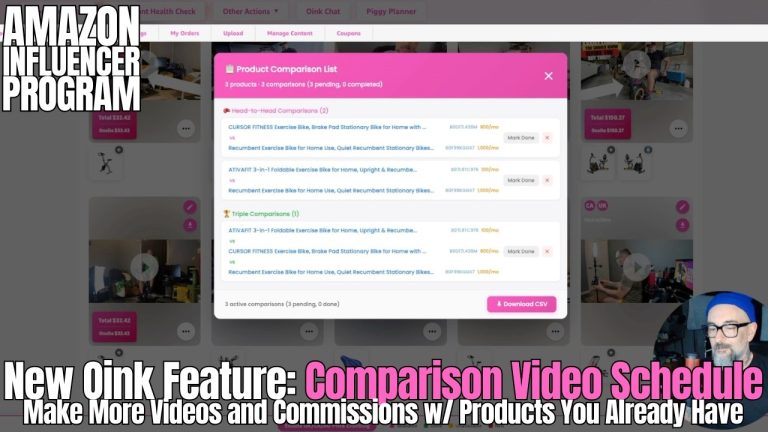
That last part is exactly what Oink’s Storefront Cross Check was built for. It scans your existing storefront videos against live Creator Connections campaigns so you are not manually hunting through a list every morning, and the Comparison Video Schedule keeps you producing content against the products that actually pay. I will keep tracking the cap data and reporting back as it changes.
If you want the tool I use to track campaigns, match them to your storefront, and keep your content pipeline full, grab Oink for Influencers and stop leaving commissions on the table.