I’ve held five figures a month in the Amazon Influencer Program since 2024, and if you want to know the single thing that moved the needle the most, it wasn’t filming more. It was getting ruthless about which products I film in the first place. Product research is where most influencers quietly leak their commissions, and it almost never shows up as a dramatic problem. It just shows up as a storefront full of videos that never really earned anything. So in this post I’m handing you the exact blueprint I run on every single video before I ever pick up my phone.
In This Article
- Why Most Influencers Pick the Wrong Products
- Filter #1: Only Film Products That Are Actually Selling
- Filter #2: Creator Connections Changes the Commission Math
- Filter #3: The Upper Carousel Rule
- Why Video Count Stopped Mattering for Me
- How I Run a Storefront Audit in Minutes
- Your Three-Filter Checklist Before You Film
Why Most Influencers Pick the Wrong Products
Here’s the uncomfortable truth: most of us aren’t underperforming because we’re lazy. We’re underperforming because we’re guessing. We see a product we personally like, or one that’s all over our feed, and we assume that means it’ll convert. But “I like it” and “it sells” are two completely different things, and Amazon only pays you for the second one. When I started treating product selection as a filtering problem instead of a creative one, my commissions stopped being a coin flip. Every product now has to survive three non-negotiable filters before it earns a spot on my schedule.
Filter #1: Only Film Products That Are Actually Selling
Sales history matters more than anything else, full stop. A product that’s already moving units has done the hardest part of the job for you: it has demand, reviews, and a price point the market has already accepted. Your video just needs to intercept a buyer who’s already leaning toward “yes.” Compare that to a product with no real sales history, where your content has to create the demand, overcome the hesitation, and close the sale all at once. That’s a brutal amount of work to ask one short video to do.
So my first question is never “is this cool?” It’s “is this already selling?” If I can’t see evidence of real, ongoing sales, the product doesn’t make the cut, no matter how much I personally like it. Go pull up your last ten videos right now and count how many feature a product with no sales history behind it. Those are the ones quietly costing you money.
Filter #2: Creator Connections Changes the Commission Math
This is the filter that took me the longest to respect, and it’s the one with the biggest payoff. A standard on-site commission category might pay you a few percent. But when a product is enrolled in a Creator Connections campaign, the brand is effectively topping up your rate, and you can push your effective commission to 10% or more on the exact same sale. Same product, same effort, double or triple the payout. That’s not a small optimization, that’s the difference between a storefront that pays your rent and one that buys you a coffee.
One detail that matters: pay attention to how much runway a campaign has left. I want to see at least 60 days remaining on a Creator Connections campaign before I’ll build content around it. If a campaign is about to expire, your video might publish, gain traction, and then lose the boosted rate right as it starts converting. Sixty days gives the content time to age, get indexed, and actually earn at the higher rate before anything changes.
Filter #3: The Upper Carousel Rule
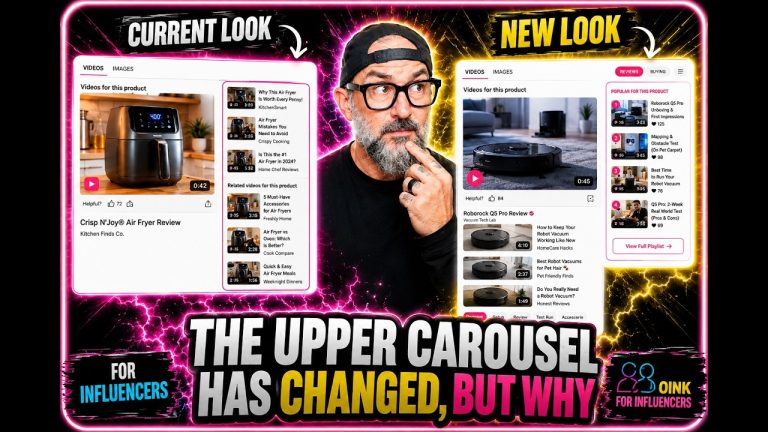
This is the one almost nobody talks about, and it quietly decides whether your video ever gets seen. On a product’s page, the video carousel placement isn’t equal. Some categories bury creator videos far down the page where shoppers rarely scroll, while others surface them in the upper carousel right where buyers are making the decision. If your video lands in a position no one reaches, it doesn’t matter how good it is.
Because of this, there are entire product categories I simply avoid, not because the products are bad, but because the carousel placement means my video gets buried. I’d rather make a strong video on a product where I know it’ll show up in a high-visibility slot than a great video that lives where no one will scroll. Placement is part of product selection, not an afterthought.
Why Video Count Stopped Mattering for Me
For a long time I believed the grind narrative: more videos equals more money. About eight months ago I stopped believing it. Once I tightened these three filters, I was making fewer videos and earning more, because every video was on a product that was selling, carried a boosted Creator Connections rate, and landed in a carousel position people actually see. Volume only helps if every unit of volume is pointed at the right target. Ten well-chosen videos will beat fifty random ones every time, and they take a fraction of the effort to maintain.
How I Run a Storefront Audit in Minutes
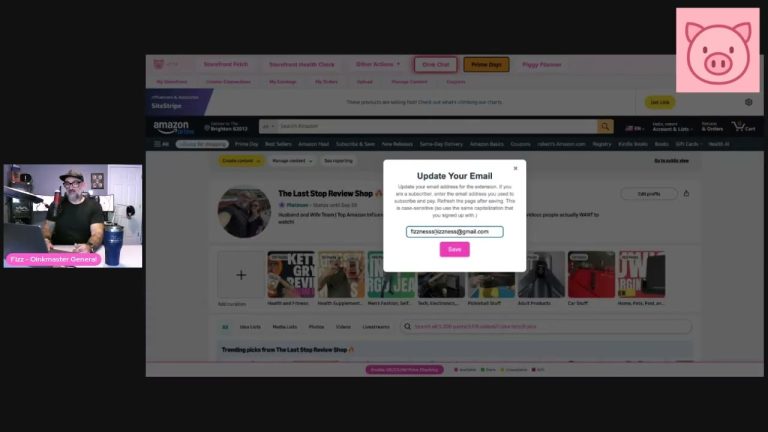
Running these three filters by hand on every product is slow, and slow means you’ll skip it when you’re busy. That’s exactly the problem I built Oink for Influencers to solve. The Storefront Cross Check lets me audit my own storefront and spot which of my existing videos are sitting on weak products, so I can prune the dead weight. When I’m sourcing new products, Oink surfaces items that are actually selling and flags the Creator Connections campaigns worth my time, including how much runway each one has left.
On top of that, the Comparison Video Schedule keeps my pipeline organized so I’m always filming winners in the right order, and Unavailable Video Matching catches products that have gone out of stock so I’m not driving traffic to a dead link. The whole point is to turn a blueprint that lives in my head into a repeatable system I can run in minutes instead of hours.
Your Three-Filter Checklist Before You Film
- Is this product actually selling, with real, ongoing sales history? If not, skip it.
- Is it in a Creator Connections campaign with at least 60 days left, so my rate is boosted to 10%+? If yes, it jumps the line.
- Will my video land in the upper carousel where buyers actually scroll? If the category buries creator videos, I pass.
Run every product through those three before you film. It feels slower for about a week, and then it becomes second nature, and your storefront starts compounding instead of leaking.
If you want to run this exact blueprint without doing all the digging by hand, that’s what Oink was built for. Head over to oinkforinfluencers.com, run a storefront audit, and start pointing every video at a product that’s actually worth your time. Pick winners, film fewer, earn more.