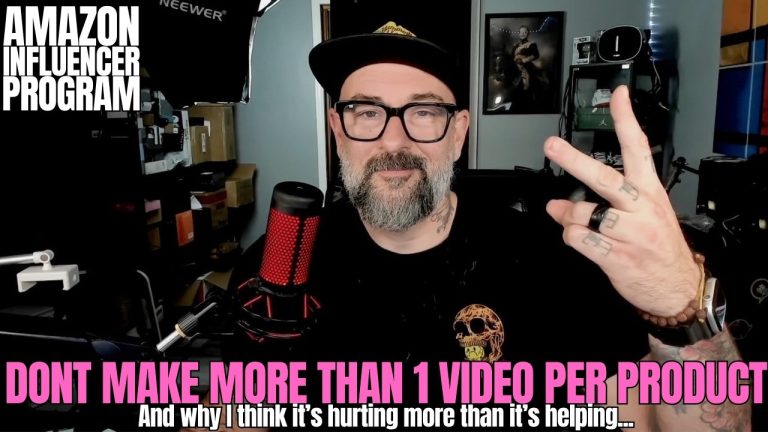
Brooke asked me for a storefront audit about five months into her Amazon influencer journey. So I pulled the last 50 videos off her storefront, went through the numbers with her, and then did the part most audits skip — I actually watched the videos and got honest about what a buyer sees when they land on one. If your storefront videos are not converting, some of this is going to feel personal. Fair warning. But almost none of the problems I found were about effort. She was working hard. She was working hard on the wrong things.
What’s In This Article
- The Numbers I Pull on Every Audit
- Why Cheap Products Quietly Cost You Money
- Upper Carousel Percentage and What 68% Really Means
- Video Length: Why Over Three Minutes Hurts You
- Why Faceless Videos Struggle Here
- The Missing Ingredient: Actual Product Demonstration
- Titles That Create Curiosity Instead of Repeating the Listing
- Watch the Full Audit
The Numbers I Pull on Every Audit
When I audit a storefront, I am looking at a short list of metrics that tend to predict commissions better than anything else:
- Average sale price of the products being reviewed
- Units sold per month on those products
- Upper carousel percentage
- How much of the storefront is Creator Connections versus organic picks
- Average video length
Brooke’s storefront was 86% Creator Connections. That is not automatically a problem — Creator Connections is a legitimate way to earn — but when the overwhelming majority of your catalog is coming from campaigns you accepted rather than products you chose, you have stopped being strategic about product selection. You are filming whatever showed up in the queue.
Why Cheap Products Quietly Cost You Money
This is the one that surprises people most, so let me be direct about it. Your commission is a percentage. Filming a $12 product and filming a $60 product take you exactly the same amount of time — same setup, same script, same upload, same everything. One of them pays you five times more per sale.
So when a storefront is full of cheap items, the creator has not saved anything. They have quietly capped their earnings and paid full price in effort to do it. This is why I keep pushing people to work in the $50-plus range wherever they reasonably can.
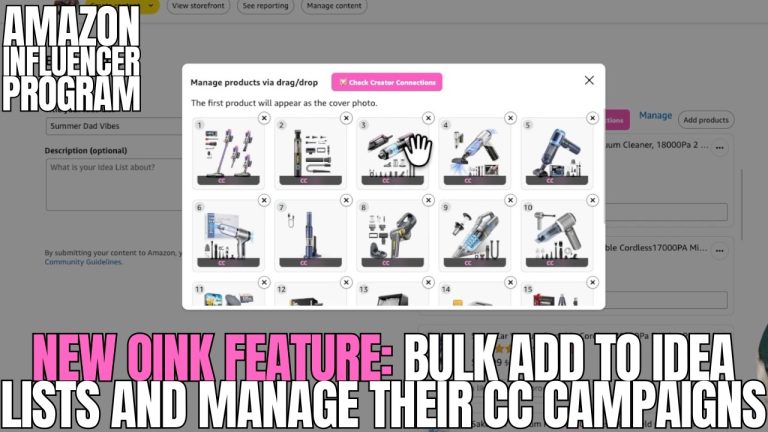
The counterweight is units sold per month. A $200 product that moves four units a month is not better than a $60 product that moves eight hundred. You want the intersection — a decent price point and real sales velocity. That intersection is genuinely hard to find by browsing Amazon manually, which is exactly why I built Oink to surface it.
Upper Carousel Percentage and What 68% Really Means
Upper carousel percentage is how often your video lands in the top video carousel on a product listing rather than getting buried further down. Brooke was sitting at 68%.
That is not a disaster. But it means roughly a third of her work was landing somewhere shoppers rarely scroll to. A video nobody sees converts at zero regardless of how good it is. This metric is worth watching because it tells you something the commission number alone does not: whether your problem is placement or persuasion. If your carousel percentage is high and you still are not converting, the videos themselves are the issue. If it is low, you have a product-selection and competition problem.
Video Length: Why Over Three Minutes Hurts You
Anything past about three minutes starts working against you on Amazon. Remember where the viewer is. They are standing in a checkout line, mentally, with their credit card halfway out. They are not settling in for a documentary. They have one question and they want it answered.
But the flip side is real too. Videos under one minute usually cannot do the job either — there is not enough room to actually demonstrate anything. The sweet spot sits in between: long enough to show the product doing the thing, short enough that the buyer never has to decide whether to keep watching.
Why Faceless Videos Struggle Here
A lot of Brooke’s videos were faceless, and I want to be careful here because faceless content absolutely works on other platforms. It does not work as well on Amazon, and the reason is specific to what Amazon buyers are doing.
An Amazon shopper watching a review video is looking for a person who owns the thing to tell them whether it is any good. That is a trust transaction. When there is no person in the frame, you have removed the thing that makes a review a review. It becomes b-roll with captions — which looks fine and persuades nobody.
The Missing Ingredient: Actual Product Demonstration
This was the biggest issue on the storefront, and it is the biggest issue on most storefronts I look at. There was almost no product demonstration. Lots of nice shots of the product sitting there. Very little of the product being used.
Several of the videos were shot in a TikTok style — fast cuts, trending audio, quick aesthetic beats. That style is built to entertain a scrolling audience. Amazon buyers do not want to be entertained. They want to be informed. They are two clicks from spending money and they want someone to reduce the risk for them.
So start every video by answering the buyer’s actual question. Does it fit? Is it loud? How hard is it to clean? Does the battery really last that long? Show it. Not tell it — show it. That is what a review video is for, and it is the point most creators miss entirely.
Titles That Create Curiosity Instead of Repeating the Listing
The last thing I hit on with Brooke was titles. Most creators title their video with a slightly reworded version of the Amazon listing title. The buyer is already reading that listing title six inches above your video. Repeating it gives them no reason to press play.
Your title needs to create a small amount of curiosity or promise a specific answer. “Does this actually fit a king mattress?” beats “King Size Mattress Protector Waterproof” every single time, because the first one is a question the shopper already has in their head.
One more small thing worth fixing while you are in there: check the links in your storefront bio. It is a two-minute job that a surprising number of people never do.
Watch the Full Audit
If you recognized your own storefront in any of this, the fix usually starts one step earlier than you think — with which products you are choosing in the first place. That is the part Oink handles for you: finding products with the price point and the sales velocity that make a video worth filming. Get that right and the rest of these problems get a lot smaller.