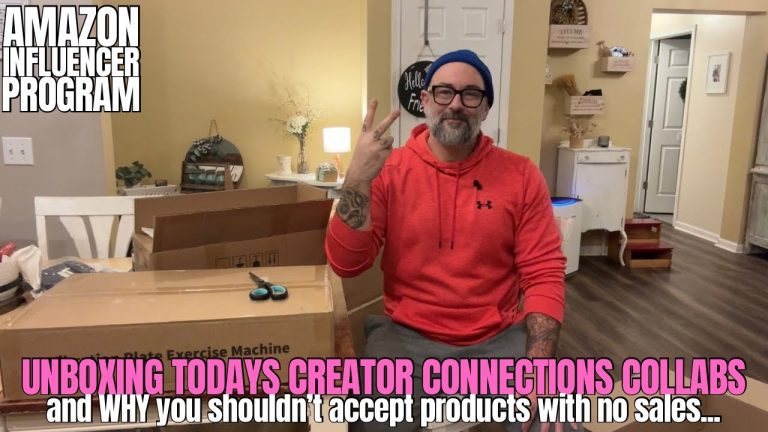
There is a loud crowd inside the Amazon Influencer Program right now telling everybody that you absolutely HAVE to charge brands upfront for every single video you make. If you are not, they say, you are leaving money on the table and you do not understand the business. I want to push back on that. Hard. Because I think it is one of the most damaging pieces of advice being passed around to new creators in this program, and it is often coming from people who are just defending the shaky model they personally built.
Let me be clear up front: if charging brands works for you, keep doing it. This is not a “right vs wrong” piece. This is a “stop letting other people define success for you” piece. The Amazon Influencer Program is wide enough for multiple business models, and you do not have to follow the advice of the loudest voice on Twitter to win at this.
Why the “Charge Upfront” Crowd Is So Loud Right Now
There are real reasons creators built their businesses around upfront brand fees. The commission model can be inconsistent. Halo sales are unpredictable. CC campaigns change. So some creators decided early on that the only way to make this work was to charge brands directly for content. Fair enough — that is a real strategy.
The problem is when those same creators turn around and tell every new person entering the program that THEY have to do the same thing or they are “doing it wrong.” That is not advice. That is them defending their model by trying to force it on everyone else. And it is leading new creators to walk into brand conversations with demands they have not earned yet, blowing up real relationships that could have grown into something bigger.
When I Used to Charge Brands — And Why I Stopped
Early in my journey I charged brands upfront. It made sense at the time. The deals felt real because money showed up before I filmed. But over time I noticed something — the brands that paid the most upfront were often the ones least invested in the long-term relationship. They paid, I delivered, the video went live, and that was it. No follow-up. No bigger campaigns. No commissions worth talking about because the products themselves were not built to sell.
The brands I built real long-term commissions with were the ones where I made the video first, showed real performance, and THEN the relationship grew. Upfront fees can actually short-circuit that whole process. You get paid once. You miss the recurring commission window. And you are right back to chasing the next upfront deal.
The Three Real Ways Amazon Influencers Win
There are basically three valid models in this program, and each one is right for a different creator at a different stage:
- Upfront brand fees. You charge a flat rate to create content. Fast cash, but limited scaling because every dollar requires a new conversation and a new contract.
- Storefront building. You make content focused on building a long-term storefront that drives consistent commissions. Slower start, but compounds over time as your video catalog grows.
- Long-term commissions. You pick winning products, you make great content, and you let Amazon’s commission engine pay you for months and years on the same video. Highest ceiling, lowest upfront pay.
Most creators who win big in this program are running a mix of two or three of these. Pure upfront-only is the lowest-ceiling model of the three, and pure commission-only requires patience most new creators do not have. The right answer for you depends on your bank account, your time horizon, and your goals — not on what some person on social media tells you.
How Charging Upfront Can Actually Kill Long-Term Commissions
Here is the part the upfront crowd does not talk about. If you demand $500 from a brand for a single video, and they pay it, you have now used up your leverage with that brand. They got the content. They are not going to send you ten more products to build a long-term partnership. The transaction is done.
Compare that to a creator who said “send me the product, no upfront fee, let me show you what I can do.” Six months later that creator is making videos for 20 of that brand’s products and earning recurring commissions on every one. The brand sees the creator as a real partner, not a one-time vendor. That is how the biggest commission earners in this program built their incomes.
Your Goals Decide Your Model — Not Twitter Strangers
If you are doing this part-time, you need consistent cash and an upfront model might fit. If you are building a real long-term Amazon affiliate business, the commission and storefront play has a much higher ceiling. If you have a household income that pays the bills and you can play the long game, the smart move is to plant a lot of content seeds now and harvest commissions for years.
Nobody else knows your finances. Nobody else knows your runway. Nobody else knows whether you are doing this for $500 a month of grocery money or to replace a $10,000 a month job. So nobody else gets to dictate your strategy. Charge if you want. Don’t if you don’t. Pick the model that gets you closer to YOUR finish line.
Pick the Products That Pay You Back — That’s Where the Real Money Is
Whichever model you pick, the actual winning move is being great at product selection. Upfront fees pay once. Bad product selection means bad commissions forever. Great product selection means a single video can pay you for two years. That is where I focus most of my energy now — finding the products that actually have a shot at producing real long-term commissions.
That is exactly what I built Oink for Influencers for. Instead of stressing over whether to charge brands $200 or $400 for a one-time video, Oink helps you find the products that will actually drive ongoing commissions — saturation data, brand health, storefront cross-check, and the Comparison Video Schedule that makes sure you are making the right content for the right products. Spend less time negotiating, more time picking winners.
Real Talk for New Creators in the Program
If you are new to this program and you feel pressured to charge brands upfront before you even have a body of work to point to, ignore the noise. Build the catalog. Show what you can do. Get a few wins under your belt with commission-only deals. Then, once you have leverage, you can negotiate upfront fees on the deals that make sense for you.
Walking in demanding $500 with no proven track record just gets brands to say no and move to the next creator. Walking in saying “let me show you results first” gets brands to send products, work with you, and turn that into something much bigger over time.
Play Your Game, Not Theirs
The Amazon Influencer Program is one of the few places left where a regular person can build a real long-term income from a phone, a ring light, and consistent effort. Do not let people who built one specific model browbeat you into thinking it is the only model. Pick the one that fits your life. Be honest about your time horizon. Pick winning products. And let your commissions do the talking.
If you want a tool that helps you focus on the product picks that actually pay back instead of the noise around fees and deals, check out Oink for Influencers. Play your game. Win it your way.