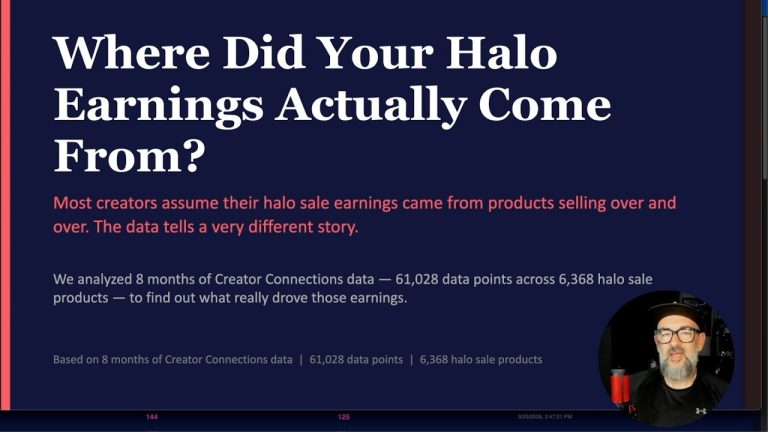
Somebody asked how you get your videos into the top carousel on Amazon, and that question is basically my bat signal. I’m in the middle of a giant data set analysis right now — almost 10,000 products and somewhere north of 25,000 videos — and the carousel question is exactly what I’ve been digging into. I’m not done yet, but some of what’s coming back is clear enough that I want to put it in front of you now, because it should change how you shoot your next video.
In This Article
- What Amazon Actually Wants From a Carousel
- Getting Into the Carousel at All Is the First Win
- Slot One Is Usually Horizontal
- Slot One Usually Has a Custom Thumbnail
- Slot One Runs Long, Everything Else Runs Short
- Tone and Product Mentions Surprised Me
- What This Does and Does Not Mean
- How to Shoot With This in Mind
What Amazon Actually Wants From a Carousel
Start here, because everything else makes more sense once you accept it: Amazon is not curating the carousel to be nice to creators. Amazon wants videos that people will actually watch and that help Amazon convert. That’s it. Amazon is trying to make money, and your video is a conversion tool sitting on a product detail page.
So if your video is good and it genuinely helps the buyer decide, you’ve got a real shot at good placement. That’s not a hack, that’s just the incentive structure. Every “fingerprint” I’m about to describe is downstream of that one fact.
Getting Into the Carousel at All Is the First Win
Before we talk about slot one, understand that being in an upper carousel at all means you got lucky out of the gate. A lot of these products have a serious backlog of videos already sitting there waiting for a shot. When you get yours, it’s a pretty big deal.
That’s the argument for volume and for picking products where the video count isn’t already stacked a hundred deep. It’s also the argument for not throwing away the shot when it comes. If you’re going to get one crack at a carousel on a good product, don’t hand Amazon a 45-second vertical clip with an auto-generated thumbnail.
Slot One Is Usually Horizontal
What if I told you that in an upper carousel, the number one slot is almost always — or at minimum, most of the time — a horizontal video?
That one is going to annoy a lot of people, because vertical is faster to shoot and it cross-posts everywhere. I get it. I’m not telling you to stop shooting vertical. Vertical has its own place and its own distribution advantages. But if the goal for a specific product is the top of an upper carousel, the data is pointing at horizontal.
This isn’t me eyeballing carousels and guessing. This is data from Amazon, at scale, across thousands of products.
Slot One Usually Has a Custom Thumbnail
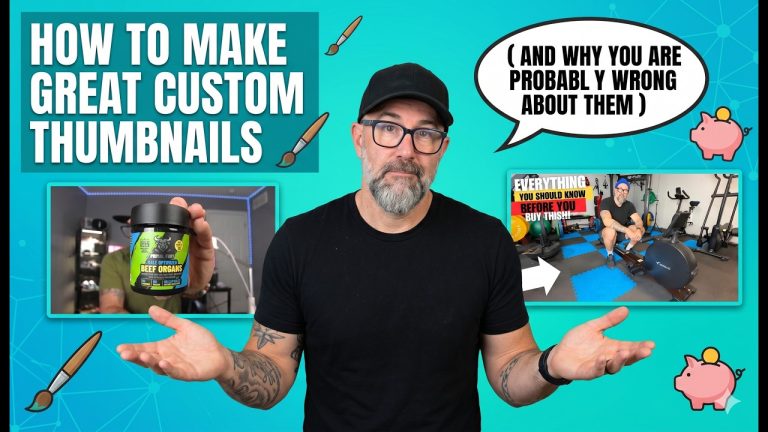
Predominantly, the video sitting in the number one slot has a custom thumbnail. Not the auto-pulled frame Amazon grabs for you. A thumbnail somebody made on purpose.
This is the cheapest change on this entire list. It costs you a couple of minutes per video and it’s one of the only carousel signals you have total control over. If you’re skipping custom thumbnails because they feel like an optional nicety, the data says you’re leaving the single easiest advantage on the table.
Slot One Runs Long, Everything Else Runs Short
Here’s a pattern that jumped out hard: predominantly, the number one slot holds a video that is over two minutes, while nearly every other position in the carousel is under two minutes.
Data coach Cla hit on this last year, talking about how length of time seemed to contribute to how well something ranked. Shout out to Cla — the large-scale data is backing that up.
The logical read on this is that a longer video means a more complete answer to the buyer’s question, which means more time on page and a better chance of a purchase. A 40-second “here it is, it’s great” clip doesn’t do much work for Amazon. A two-and-a-half-minute walkthrough that actually shows the thing in use does.
Tone and Product Mentions Surprised Me
Two findings I flat out did not see coming.
- Enthusiastic tone ranked better in slot one than it did in the other slots. Videos with energy behind them clustered at the top.
- The more often you mention the product during the video, the more likely it was to land in slot one. Not keyword stuffing — just actually naming the thing you’re reviewing instead of saying “it” and “this” for two minutes straight.
Neither of those was on my bingo card. Both are free to implement. You don’t need a new camera or a new light to say the product name out loud more often and bring some energy to it.
There are several other things in this analysis I’m going to get into when it’s finished, and I’ll do a full breakdown video when it is. I don’t want to get too far into the weeds before the numbers are final.
What This Does and Does Not Mean
Let me be straight with you, because I don’t want anyone running off and treating this like a formula.
Is it a slam dunk? No. Absolutely not. There is nothing you can do to force a slot. There’s no direct A-to-B here, and anyone selling you one is selling you something.
What I can say is this: when you look at 10,000 products and 25,000 to 30,000 videos and Amazon keeps saying basically the same thing over and over again, you get a pretty high confidence level that there’s a real correlation in there. That’s how this kind of analysis is supposed to be used — not as a guarantee, but as a way to stop guessing.
Once you understand what the data means, you can create content in the likeness of what Amazon appears to prioritize. You’re not forcing anything. You’re just not accidentally working against it.
How to Shoot With This in Mind
If you want a practical checklist off of what’s come back so far, here’s what I’d do on your next high-priority product:
- Shoot it horizontal if the carousel is the goal.
- Make a custom thumbnail. Every time. No exceptions.
- Push past two minutes with real content — demonstration, not filler.
- Bring energy. Flat delivery is costing you placement.
- Say the product name throughout instead of defaulting to “it.”
- Pick products where you actually have a shot at the carousel in the first place, rather than piling onto something with a 200-video backlog.
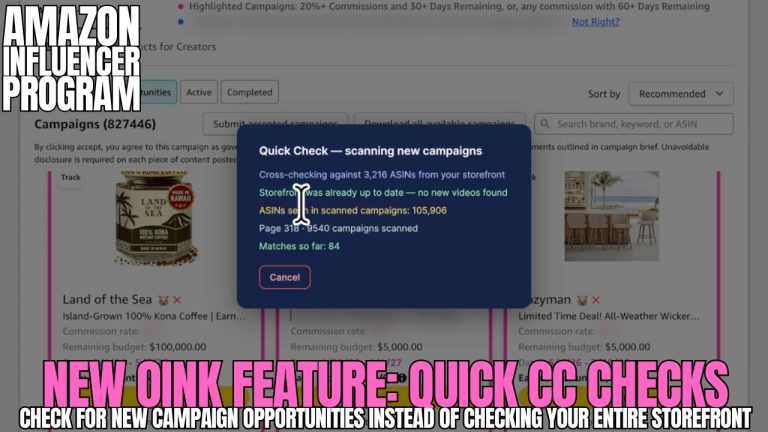
That last one is where a tool matters. Picking the right product to point all this effort at is the difference between a video that gets seen and a video that sits in a queue forever. That’s what Storefront Cross Check, Unavailable Video Matching, and the Comparison Video Schedule inside Oink are built to solve — they tell you where the openings actually are before you spend an afternoon filming.
There’s nothing you can do to force it. But apparently there are some things Amazon looks favorably upon. When you get your crack at an upper carousel, you might as well match the profile.
I’ll publish the full carousel analysis when the data set is finished. In the meantime, if you want the product research side handled so your carousel shots actually land on products worth shooting, that’s exactly what I built Oink for — take a look at oinkforinfluencers.com and stop picking products by vibe.