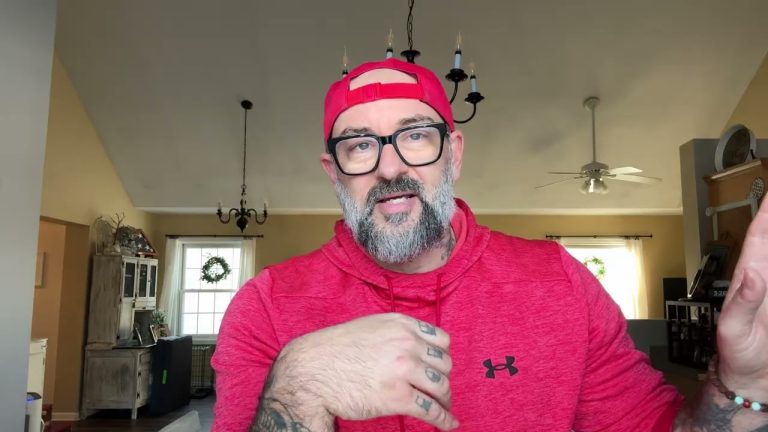
Rob delivers a candid “wake-up call” to Amazon influencers entering 2026, using his unique vantage point across the community to highlight a critical misalignment in how creators are spending their time and energy. Through conversations across YouTube, Facebook groups, and the Oink community, Rob has observed that the majority of influencers are focusing on the wrong priorities—getting caught up in short-term commission tracking and individual sale metrics while neglecting the strategic content creation that actually builds sustainable income. This video is essential viewing for any creator who feels like they’re working hard but not seeing the growth they expected.
Table of Contents
- Two Different Approaches in the Community
- The Data Shows the Problem
- What the Majority of Creators Are Doing Wrong
- Creator Connections Chaos as a Symptom
- Testing Your Dependence on Short-Term Wins
- Understanding How Earnings Actually Work
- What Actually Drives Growth in the Program
Two Different Approaches in the Community
Rob has observed a stark division in how creators are approaching their work in the Amazon Influencer Program. The established, successful influencers in the community operate from a fundamentally different playbook than less experienced creators. The high performers keep their heads down and focus on what actually moves the needle: consistent growth, continuous content creation, rigorous product research, and strategic planning for the long term. They understand that their attention and energy are finite resources that should be allocated to activities with compound returns. Meanwhile, a large portion of less experienced creators are caught in a different trap entirely. They’re wrapped up in obsessing over individual Creator Connections sales, monitoring halo sales figures, tracking commissions on spreadsheets, and celebrating short-term wins from specific campaigns. While these activities feel productive and provide immediate feedback, they’re actually misdirecting energy away from the foundational work that creates sustainable income.
The Data Shows the Problem
Rob has direct evidence of this misalignment through his content analytics. Videos about halo sales mechanics, Creator Connections commission calculations, and short-term earning strategies consistently perform 3 to 4 times better—generating significantly more views—than videos focused on strategic content creation, product research methodology, or long-term planning. This discrepancy perfectly illustrates the problem. Creators are hungry for content about tactics and short-term metrics because that’s where their attention is focused, which creates a feedback loop: popular content about short-term tactics reinforces the idea that this is what matters, leading more creators to focus on those activities. The irony is that this engagement pattern around short-term metrics is simultaneously evidence of the fundamental mistake the community is making. The very popularity of these “quick-win” discussions reveals that creators are collectively optimizing for the wrong objective.
What the Majority of Creators Are Doing Wrong
Rob has been vocal for months about the core principle that should guide creator behavior: focus on making more videos about products that are actually selling. This isn’t complicated advice, but it requires discipline and faith in a longer-term approach. Many creators instead get caught in what feels like productive activity but isn’t: they’re researching which Creator Connections products are in their niche, tracking which campaigns offer the best commissions, and obsessing over which halo sales events generated their best returns. These activities create a sense of busyness and engagement with the platform, but they don’t actually generate new content or expand audience reach. The creator is essentially rearranging the deck chairs on existing content rather than building new content that could generate new audience members and new revenue streams. The fundamental mistake is treating the Creator Connections dashboard as the primary source of income growth rather than treating consistent, strategic content creation as the engine that drives everything else.
Creator Connections Chaos as a Symptom
Rob frames the recent chaos and uncertainty around the Creator Connections program—the rule changes, the controversial decisions, the confusion about campaign eligibility—as a symptom of a larger problem rather than the root cause itself. Creators are so focused on the short-term mechanics of Creator Connections that every fluctuation in that system sends shockwaves through the community. There’s endless discussion and anxiety about what changed, how it affects this week’s earnings, and what brands are now accepting. All of this chatter is drowning out any strategic conversation about how creators should be positioning themselves for long-term sustainable growth. The instability in Creator Connections isn’t irrelevant, but the degree to which it’s consuming creator attention and energy is disproportionate and counterproductive. A creator with a deep library of consistent, high-performing content would weather Creator Connections disruptions far better than a creator with thin content distribution who depends heavily on short-term campaign mechanics.
Testing Your Dependence on Short-Term Wins
Rob presents a thought experiment for creators to assess their own situation honestly. If Creator Connections disappeared tomorrow, or if halo sales were eliminated, or if the affiliate commission structure changed radically, would you be okay? Would your income and content strategy still be viable? If the answer is no, then you’ve been operating with too much dependence on these mechanisms, and you’re actually more vulnerable than you might think. This isn’t idle speculation—the Amazon Influencer Program has seen significant changes throughout its history, and there’s no guarantee that the current earning mechanisms will remain unchanged. Every halo sale you’ve earned, Rob reminds creators, is fundamentally a byproduct of content you created. You didn’t directly “earn” that halo sale in the moment—the system credited it to you because you had previously created content that influenced the purchase. Similarly, every Creator Connections match you receive is a direct result of consistently creating content about products in that niche. Your consistent content creation is what made you eligible for that match. The earnings are the reward for the work, not the work itself.
Understanding How Earnings Actually Work
This perspective shift is critical for reframing where creator effort should be allocated. Many creators treat daily Creator Connections cross-checks—going through the dashboard to see what new campaigns appeared, checking which products they’ve created content on—as growth activity. But this isn’t growth. This is leverage. You’re taking content you created previously and applying Creator Connections mechanics to it. There’s value in doing this efficiently, but efficiency in exploiting existing work isn’t the same as creating new work. If you spend two hours per day doing Creator Connections optimization but only one hour per week creating new content, you’re completely backward in your resource allocation. The compounding returns come from content creation. A video published today about a selling product might generate views, halo sales, and Creator Connections matches for years into the future. That asset pays dividends far beyond the day you publish it. Creator Connections optimization, by contrast, provides immediate but bounded returns—you’re working with the content that already exists.
What Actually Drives Growth in the Program
The core message Rob wants to land with creators is straightforward but requires commitment to implement: create content consistently on products that are actually selling well. This approach builds on itself. More content about selling products means more inventory of content that can match with Creator Connections campaigns. More content on the same selling products means deepening your association with those niches and building audience trust in that category. More consistent publishing builds audience expectations and loyalty. More strategic focus means you’re not spreading your effort across products that don’t convert. The creators who appear successful in the program years from now won’t be the ones who had the best Creator Connections tracking systems or who were first to accept every new campaign. They’ll be the creators who consistently published content about products their audience wanted, who built authority in specific niches, and who created such a robust library of content that they had multiple revenue streams flowing from it. That’s the differentiation that actually matters, and it requires shifting focus away from the short-term metrics and toward the long-term fundamentals. The challenging part is that this approach requires patience and faith—you won’t see the results of this shift immediately, which is why so many creators abandon it in favor of chasing short-term commission tracking.