This is the million-dollar question in the Amazon Influencer Program: once you need more products, where are you supposed to get them? Today we’re going over products 101 and what I lovingly call the product pipeline.
- Why You Need a Product Pipeline
- Pathway One: Buy It Yourself
- Pathway Two: Creator Connections Samples
- Reaching Out to Brands Directly
- Make It Easy for Brands to Find You
- How We Did It Before Creator Connections
- First: Exhaust the Products You Already Have
Why You Need a Product Pipeline
At some point, every Amazon influencer hits the same wall. You’ve filmed what’s in your house, you’ve filmed your order history, and now you need more products if you want to actually scale. The question is where those products are supposed to come from.
That’s what I call the product pipeline: the repeatable ways new products come into your hands so you always have something worth filming. There are really only a couple of scalable, repeatable places. Let’s go through them.
Pathway One: Buy It Yourself
The first pathway is the simplest. You’ve got 50 bucks in your pocket, Amazon says it’ll have the product at your door tomorrow, and you buy it. A lot of people do this.
A lot of people also shouldn’t. It’s a real risk. Worst case, you spend money on a product and never make that money back. More often, you make your money back but not much on top of it. I love the research side of this, and buying products can work as a strategy, but newer creators should hold off. You just don’t know enough yet to have a good feel for what you’re looking at.
If you do buy products, do the research first. That’s a big part of why I built Oink for Influencers: so you can see what’s actually worth filming before you spend a dime.
Pathway Two: Creator Connections Samples
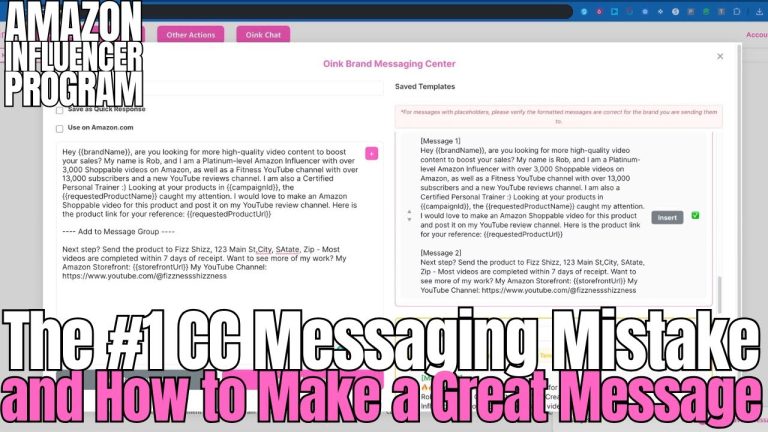
The second pathway is somebody sending the product to you. The most popular way that happens right now is Creator Connections. Most brands on Creator Connections aren’t offering samples, but the ones that are still make up the largest pool we have for collaboration samples.
These samples come with their own problems, though:
- The products are often oversaturated with videos, because the brand is handing them out to a lot of creators.
- A lot of things on Creator Connections don’t sell well. That’s often why they’re on there in the first place: the brand is trying to get them promoted.
Creator Connections is still a viable place to get products. Just go in with your eyes open.
Reaching Out to Brands Directly
Something a lot of people don’t think about is reaching out to brands yourself. Go to the brand’s website, find their contact or partnership info, and start a conversation there.
One warning: don’t try to do this through Amazon’s seller messaging. That system is meant for customers. If Amazon catches you using it for business purposes, they won’t be thrilled with you.
Make It Easy for Brands to Find You
The other way products come in is brands reaching out to you first. A lot of people don’t realize how common this is. If you give brands pathways to find you, they will find you.
The best place to start is your Amazon influencer storefront:
- Log in to your storefront and click the Edit Profile button.
- Add every social media channel you’re active on.
- Keep posting content so those channels keep growing.
This is one of the main ways brands reach out to me: DMs on Facebook Messenger, Instagram, and YouTube. The more content you put out and the bigger you get as a creator, the more brands will want to work with you.
How We Did It Before Creator Connections
Keep this in mind: before 2025, Amazon influencers barely used Creator Connections for products. When the program got really popular in 2023 and 2024, our products came from two places. We bought them, or brands reached out to us first through DMs. Collaboration samples just didn’t exist.
Honestly, I think Creator Connections has made a lot of people lazy here. We used to have to build real communication with brands if we wanted to work with them. Now those pathways get handed to us on a silver platter, and a lot of people don’t know how to work for it beyond sending automated messages to brands in bulk.
This is why I think the product pipeline is one of the most important parts of the whole system. A lot of people can’t figure this part out. They can’t or don’t want to spend money on products, they can’t get brands to send them anything, and they get stuck. There’s always a way to figure it out. It just takes patience.
First: Exhaust the Products You Already Have
Before you go chasing new products, ask yourself whether you’ve actually exhausted the ones you have. For every product in your order history, have you made all four video types?
- A content anchor video
- A vertical video
- A stack video
- A comparison video
Most people I talk to who think they’ve exhausted their products haven’t. They made one video per product and moved on. That’s not enough to stay scalable. Run through the four-video checklist on every single product first. If you’ve truly done that, then it’s time to build your product pipeline.
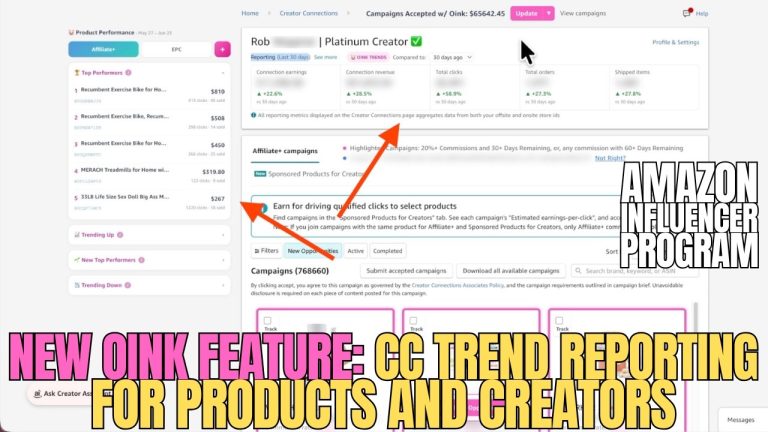
When you’re ready to find new products, Oink for Influencers can help you spot what’s worth filming and which campaigns are actually worth your time. Watch the full video below for my complete breakdown.
Ready to find products worth filming? Try Oink for Influencers.