Creator Connections was not designed for Amazon influencers. If you are an Amazon influencer reading that, you are probably going, “What?” Especially if you are new to the program. But stick with me, because there is a comment I keep seeing in the Facebook groups that comes from a basic misunderstanding of what Creator Connections actually is, who it was built for, and how we fit into it.
The comment goes something like this: “Why are people claiming Creator Connections campaigns if they do not even have the product?” And look, no offense to anybody asking that. It is a fair question if you came into this ecosystem through the influencer door. But the answer says a lot about how this whole thing works, and understanding it will save you a lot of frustration.
What We Are Covering
- Who Creator Connections Was Actually Built For
- When Amazon Influencers Showed Up
- So Why Are People Claiming Campaigns Without the Product?
- The Part Nobody Talks About: The Big Publishers
- What This Means for You
Who Creator Connections Was Actually Built For
Creator Connections has been around a long time. Long before the Amazon influencer community started paying attention to it. And in that whole stretch, it was not built with us in mind at all.
It was designed around affiliates. People running Facebook groups, YouTube channels, blogs, websites, email lists, all kinds of social. Their model was simple: create links for products, post those links to your following, and if people like the product they click through to Amazon and you make money. Standard affiliate link stuff. No product in hand required, ever. That was never part of the equation.
You can still see the fingerprints of that original design today. Go open up a Creator Connections campaign and read the campaign details. Brands are asking creators to do all kinds of things in there that have nothing to do with making a product review video. That is not an oversight, that is the program showing you who it was written for.
When Amazon Influencers Showed Up
It was not really until the beginning of 2025 that the Amazon influencer community collectively went, “Wait a minute, we can use this too.”
I remember toward the end of 2024 somebody told me they thought we could earn on our videos through Creator Connections, and my honest reaction was confusion. I actually posted in a Facebook group asking if anybody had heard anything about it. And back then, if you reached out to Amazon customer support and asked, they would tell you flat out: no, as an Amazon influencer, this is not for you. Meanwhile people were earning. So clearly something was off with that answer.
It took until roughly the end of 2025 before Amazon actually acknowledged us in their own documentation. That is recent. Very recent. So if you feel like the rules around Creator Connections have been murky, you are not imagining it. They genuinely were, for a long time.
We are part of that ecosystem now. Officially. But the ecosystem itself was built around off-site affiliates, and that shapes everything about how it behaves.
So Why Are People Claiming Campaigns Without the Product?
Now we can answer the question properly.
People are claiming campaigns without the product because the program was never designed around having the product. It was designed around having a following and posting links. Those affiliates never had the products. They were not supposed to.
The product requirement is an influencer requirement. We need the product because our deliverable is a video, and you cannot film a review of something you do not have. That is our workflow, not theirs. When an off-site affiliate claims a campaign, they are doing exactly what the program was written for.
And here is the thing worth sitting with: building a following that actually converts is significantly harder than getting a product sent to you. Incredibly harder. So the idea that those creators are somehow taking a shortcut does not really hold up.
The Part Nobody Talks About: The Big Publishers
It is not just individual people posting off-site either. Large publishers are in this ecosystem too.
Think about the New York Times, TechCrunch, CNET, NerdWallet. When those outlets publish a roundup article with product links in it, those are overwhelmingly Amazon affiliate links. And those organizations participate in Creator Connections as well.
This matters more than most people realize. A lot of the changes we have seen over the last year or so, including the way reporting changed, are widely assumed to have happened because Amazon has been catering to those larger publishers. When you are trying to figure out why a change landed the way it did, it helps to remember that we are not the only audience Amazon is designing for. We are one group inside a much bigger ecosystem, and often not the biggest one.
What This Means for You
None of this means you do not have a place here. You absolutely do. Amazon influencers have been genuinely included in the ecosystem and there is real money to be made in Creator Connections.
What it means is that you should stop expecting the program to behave like it was built for you, because it was not. There is a whole group of people who were here first, who use it in the way that fits their model, and who have every bit as much right to those campaigns as we do. If somebody clicks an affiliate link for a vacuum cleaner and buys it, that creator earned the campaign. Same as us.
- Read campaign details knowing they were written with affiliates in mind. Some requirements will not map cleanly to video work.
- Do not assume a change was aimed at influencers. Often it was aimed at publishers and we caught the ripple.
- Focus on what you actually control: picking the right products and making content that converts.
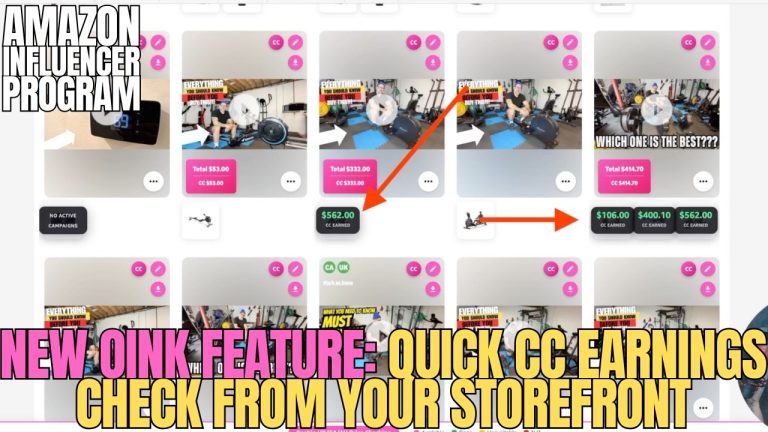
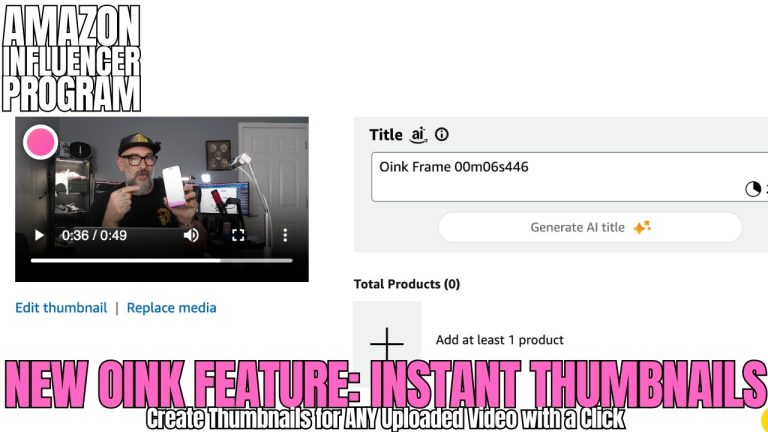
That last one is where I spend most of my energy, and it is why I built Oink. Whatever the program does around us, the creators who win are the ones consistently choosing products worth making content for. That part has not changed and it is not going to.
Call this Creator Connections 102. Understanding who the program was built for makes a lot of its quirks stop feeling personal. If you want tools built specifically for how Amazon influencers actually work, come take a look at Oink for Influencers.