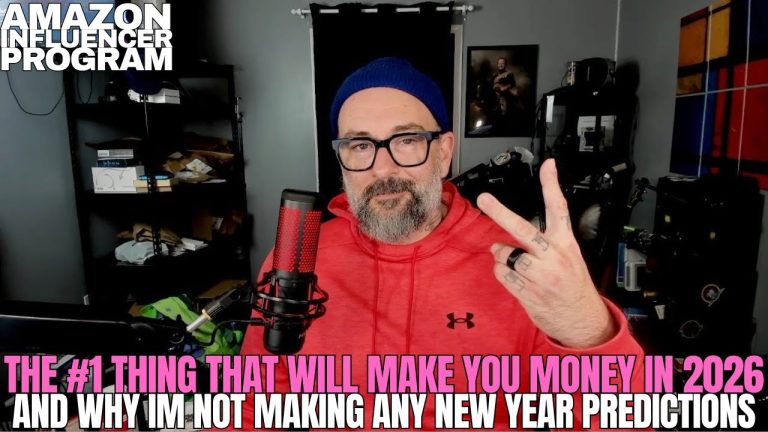
If you’ve been obsessing over your carousel position in the Amazon influencer program, it’s time to stop. Rob, a seasoned Amazon influencer with over two and a half years of experience, breaks down why carousel placement is one of the most useless metrics to track and reveals the one metric that actually matters for your bottom line.
Table of Contents
- Why Carousel Placement Is a Useless Metric
- The Problem of Constant Flux
- Placement Is Completely Uncontrollable
- The Validation Trap for New Creators
- Performance Is the Real Game-Changer
- How to Actually Improve Your Performance
- What Successful Influencers Focus On
- The Path Forward: Focus on Profitability
Why Carousel Placement Is a Useless Metric
Rob explains that countless creators in the Amazon influencer program spend far too much time worrying about whether their videos appear in product carousels and what position they occupy. The carousel is where shoppable videos appear on Amazon product pages, and while it might seem like coveted real estate, the reality is far different. Rob is adamant that if you are spending significant energy tracking your carousel position, you are missing the bigger picture entirely.
The Problem of Constant Flux
One of the primary reasons carousel placement is unreliable is that it constantly changes. Amazon’s algorithm determines which videos appear in carousels and in what order, and it is perpetually evolving. Rob points out that you might see your video in position three, but five minutes later it could be in position eight. An hour later, it might not appear in the carousel at all, and by the next day, it could be back in position one. This constant fluctuation means checking your carousel position provides zero actionable intelligence. You also never know what other people’s carousels look like since Amazon personalizes the experience for every shopper.
Placement Is Completely Uncontrollable
Beyond the issue of constant change, carousel placement is entirely outside your control. Unlike traditional retail environments where brands can negotiate with retailers for premium shelf positions or pay for special placement or design packaging to stand out, Amazon’s algorithm makes all carousel decisions autonomously. You cannot choose your position, and you cannot guarantee your video will appear in a carousel at all. If you are spending mental cycles worrying about something over which you have zero influence, you are diverting energy away from areas where you can actually make a difference.
The Validation Trap for New Creators
Rob addresses the psychological component with empathy. Many newer creators gravitate toward carousel position as a visible sign that their efforts are paying off. When you are new to the program, you crave external confirmation that your work matters. However, carousel position is the wrong place to look for that validation. It creates false hope when you are in a good position and unnecessary discouragement when you are not, all while being completely divorced from actual financial performance. The real sign that your effort is paying off is not where your video sits in a carousel but whether your video is actually making you money.
Performance Is the Real Game-Changer
The metric that truly matters starts with the letter P, and it is performance. When Rob examines his products in his Oink dashboard, he does not check what position he occupies in a carousel. Instead, he focuses on whether he is making sales, earning commissions, and whether his videos are converting. You could be in position one of a carousel and make zero sales because the product does not sell or your video is not compelling enough. On the other hand, you might not even see yourself in the carousel yet still be generating consistent sales because Amazon is showing your video to the right people at the right time. Performance trumps placement every single time.
How to Actually Improve Your Performance
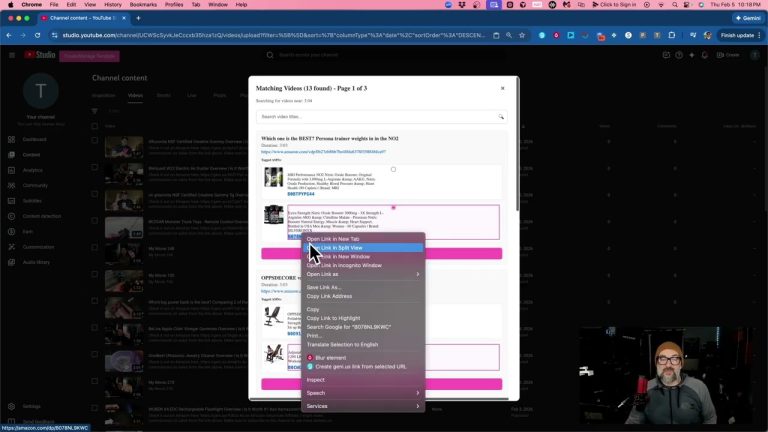
The beautiful aspect of focusing on performance is that it is actually within your control. You can make better videos, choose better products, and optimize your titles. Rob recommends leveraging Oink’s low-performing videos feature, which identifies your worst-performing content where products are actually selling but you are not making commissions. Once identified, you can submit bulk updates to change titles slightly on all of them, essentially putting them back through Amazon’s system for reconsideration. The goal is profitability, not placement. It does not care about where you sit in the carousel. It focuses on whether you are making money.
What Successful Influencers Focus On
Rob shares that the influencers making the most money are not the ones obsessing over carousel positions. The top earners focus relentlessly on performance metrics and data analysis. They examine their sales data, identify underperforming videos, and take decisive action. They remake videos that are not converting, move on from products that are not gaining traction, and continuously optimize based on real results. They do not sit around checking carousel positions all day. That behavior is a hallmark of creators who have not yet figured out where to direct their energy for maximum return.
The Path Forward: Focus on Profitability
Rob’s final message is clear: stress about making better content, picking products that actually sell, and analyzing your performance data. Do not stress about where you sit in a carousel that changes every few minutes. The influencers building sustainable, profitable businesses have made this mental shift toward profitability and performance over placement. Oink has the tools to help you see what is actually working and what is not. If you have not tried it yet, Rob highly recommends giving it a look to transform how you approach your Amazon influencer business.